
 Living
Think back to your grandparents’ garden. There was probably a little character in it somewhere. A gnome with a fishing rod by the pond, a stone frog on the back step, a line of ducks marching across the lawn toward nowhere in particular. Garden figurines give a garden a personality. They make people smile and give kids something to hunt for. Overdo it, though, and the whole place starts to look like the clearance aisle of a garden center.
So how do you pick the right characters, and how many is too many? We make these little figures for a living, and we’ve seen both extremes.
Where Garden Figurines Came From
People have been putting figures in their gardens for a very long time. Wealthy Romans set statues of gods and animals among their fountains and clipped hedges. Renaissance gardens in Italy were crowded with stone figures, and the grand English country gardens of the 1700s had statues, urns and follies around every corner.
The most famous garden character of all is German. In the 1870s, Philipp Griebel started making terracotta gnomes in the town of Gräfenroda, based on old folk tales of little earth spirits who guarded treasure and helped in the garden. They spread across Europe fast. In England, Sir Charles Isham had already brought a group back from Germany in 1847 for his garden at Lamport Hall, and one of them, known as Lampy, survives today. He’s said to be the oldest garden gnome in the world.
Gnomes have had a bumpy ride since. The Royal Horticultural Society famously banned them from the Chelsea Flower Show for years, then relented for the show’s centenary in 2013. The gnomes, as ever, outlasted the objection.
Start With the People, Then the Garden
Who actually uses the garden? A family with young kids will get far more out of a cheeky frog or a small dinosaur than a serene stone heron. Someone who wants a quiet spot for morning coffee might want the heron.
What’s the style? A cottage garden and a clean modern courtyard want completely different characters. And how much room is there? A big lawn can take a life-size deer. A small courtyard can take one or two pieces before it starts to feel crowded.
Answer those three and most of the decisions make themselves.
The Characters
The classics
Frogs are probably the most popular garden figurine of all, and they earn it. In many cultures they stand for luck, change and new beginnings, and they look completely at home by a pond, a bird bath or a damp, shady corner. Gnomes are the other classic. In the old tales they guarded the garden and brought good luck. These days they mostly bring the jokes, especially when they’re caught doing something ridiculous, like napping in a wheelbarrow.
Garden wildlife
Hedgehogs are a favorite across Europe, where the real ones are welcome visitors that eat slugs and beetles. A hedgehog figure under a shrub looks cozy and natural. Rabbits and hares bring a burst of spring energy, peeking out of flower beds and the vegetable patch. Owls stand for wisdom and calm, and plenty of gardeners also hope one will scare off pigeons. It does, briefly. Birds quickly work out it never moves, so shift it to a new spot every few days if you want it to keep working.
Then there are the birds proper. Herons suit ponds. Chickens suit vegetable plots, and a rooster up on a wall adds instant farmhouse character. Snails and tortoises round things out at the slow end. In many cultures the tortoise is a symbol of long life and patience, which feels right for something that sits at the edge of a path for twenty years.
Characters with meaning
A seated Buddha brings a sense of calm and is popular in quiet, Zen-style gardens. Please place spiritual figures with respect. Many Buddhists prefer a statue raised off the ground on a plinth or stone, in a clean and peaceful spot, and never in a bathroom or used as a joke. Angels are often chosen for memorial gardens and quiet corners. Cats and dogs are a gentle way to remember a much loved pet, especially if the figure sits in its favorite sunny spot.
Just for fun
Fairies and mushrooms under the ferns make a woodland corner children will visit daily. Bees, butterflies and beetles are cheerful and a nice nod to the real pollinators. And dinosaurs, frankly, have no business in a garden and are loved by every child who has ever found one there.
Where Each One Lives
Figurines look most natural where the real animal might turn up.
| Character | Where it looks most at home |
|---|---|
| Frog | By a pond, bird bath or damp shady corner |
| Heron | At the edge of a pond or stream |
| Hedgehog | Under shrubs, near a log pile or at the foot of a hedge |
| Rabbit | Peeking out of a flower bed or vegetable patch |
| Owl | On a fence post, tree stump or wall |
| Chickens and rooster | In the vegetable garden or near a shed |
| Snail or tortoise | At the edge of a path or on a step |
| Fairy or mushroom | Under ferns or at the base of a tree |
| Gnome | Almost anywhere, especially near a pond or a bench |
Materials, Honestly
The material decides how long your figurine lasts and what it’ll look like in a few years.
| Material | Look | Weather resistance | Typical lifespan outdoors |
|---|---|---|---|
| Resin | Detailed and colorful | Fades in sun, can crack in frost | A few years |
| Concrete or cast stone | Classic and solid, grows moss | Heavy and stable, can flake in hard frost | Many years |
| Terracotta | Warm and earthy | Can crack in frost unless frost-proof | Several years with care |
| Glazed ceramic | Bright and shiny | Can crack in frost | Best under cover |
| Wood | Natural and rustic | Rots over time | A few years |
| Metal (iron, steel, bronze) | Rusty, dark or shiny patina | Frost-proof, sun-proof, very tough | Decades |
We’ll declare a bias before saying this, since we make metal ones. Resin figurines are cheap and detailed, but many lose their color after two or three sunny summers. Metal costs more at the start, but it doesn’t fade, doesn’t crack in frost, and simply ages into a warmer color. Over ten years, it usually works out as the better deal.
How Many Is Too Many?
Small figurines work best close to where people sit or walk, beside a bench or at the edge of a path. Larger pieces belong across a lawn or at the far end of the garden. Remember that plants grow, so a small rabbit that stands out in April may have vanished by midsummer.
Then there’s the gnome army problem. One figurine leads to another, and suddenly there are twenty scattered across the lawn. Our rule of thumb is three to five in any one area, grouped into a little scene rather than dotted around. A family of three ducks walking in single file looks charming. Fifteen unrelated animals look like a yard sale.
Give Them Something to Do
The best garden figurines look as though they’re up to something. A frog sitting on a flat stone by the pond, as if it’s reading. A family of hedgehogs heading out from under a shrub in single file. A rooster on the garden wall looking extremely pleased with himself. A cat staring hard at a metal bird on the next post along. A gnome on the rim of a planter with his feet dangling over the edge.
And think about the view from indoors. You’ll see the garden through a window far more often than you walk through it, so put at least one favorite where you can see it from the kitchen.
Kids and Figurines
Hide five or six small figurines around the garden and it becomes a treasure trail. Let the kids name them. A frog called Frank quickly becomes part of the family, and you’ll hear about Frank at dinner. Every so often, move one overnight. The morning the snail has “wandered” to the other side of the lawn is a big morning.
Just keep it safe: sturdy pieces, smooth edges, and anything tall pinned firmly into the ground.
Figurines That Remember Someone
Many people use a figurine to remember someone. A statue of a pet in its favorite sunny spot, an angel beside a bench, a robin or a cardinal on a post. Pair it with a favorite plant, a place to sit, and perhaps a small plaque with a name. It becomes the quietest corner of the garden, and often the most visited.
Garden Figurines as Gifts
Garden figurines make surprisingly good presents, mostly because gardeners are hard to buy for and already own every tool. A frog for someone’s new front step says “welcome home” without a card. A hedgehog or a robin suits the friend who spends every weekend in the borders. A small rooster is a good bet for anyone who has just started keeping real hens and won’t stop talking about it. For someone who has lost a pet, a figure in the same shape and color, left somewhere sunny, can mean more than flowers.
Tuck a note under it explaining why you chose that particular character. Gardeners tend to keep those notes.
Looking After Them
Resin needs a wash with soapy water and a spray of clear UV-protective sealer each spring to slow the fading, and it should come indoors before hard frosts. Concrete and stone just want a gentle scrub with water and a soft brush. Moss and lichen add character, so there’s no need to remove them unless you’d like to. Keep terracotta and ceramic dry in winter, or raise them on pot feet so water drains away. Metal needs almost nothing, though a thin wipe of linseed oil or clear outdoor sealer once a year will slow the rust if you want to. Whatever the material, check figures are stable after storms and clear away fallen leaves that trap damp around their feet.
Handmade or Mass-Produced?
Factory figurines come out of the same mold, so every frog looks exactly like the next. Handmade ones don’t. Each is shaped by a person, so the tilt of a head or the curve of a tail varies slightly from piece to piece, and that’s what makes them feel like characters rather than products.
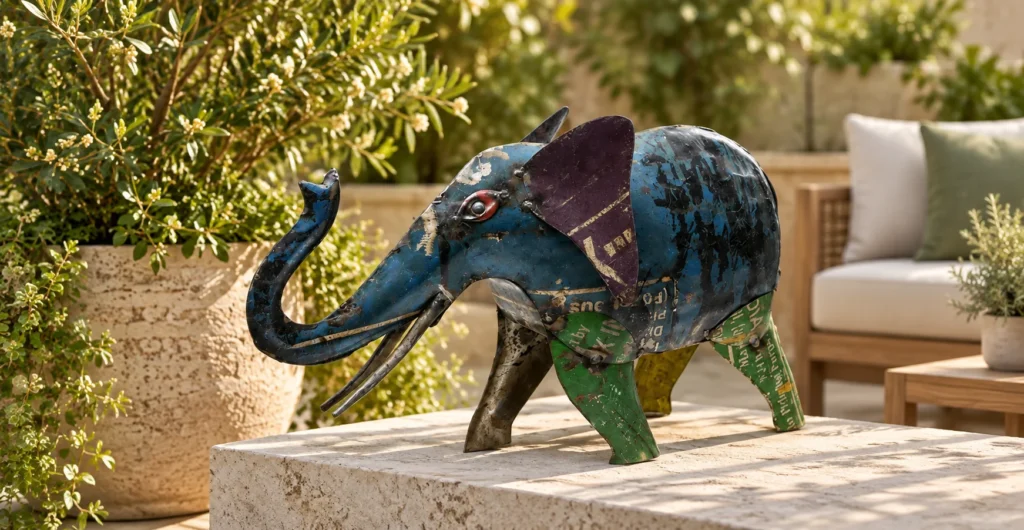
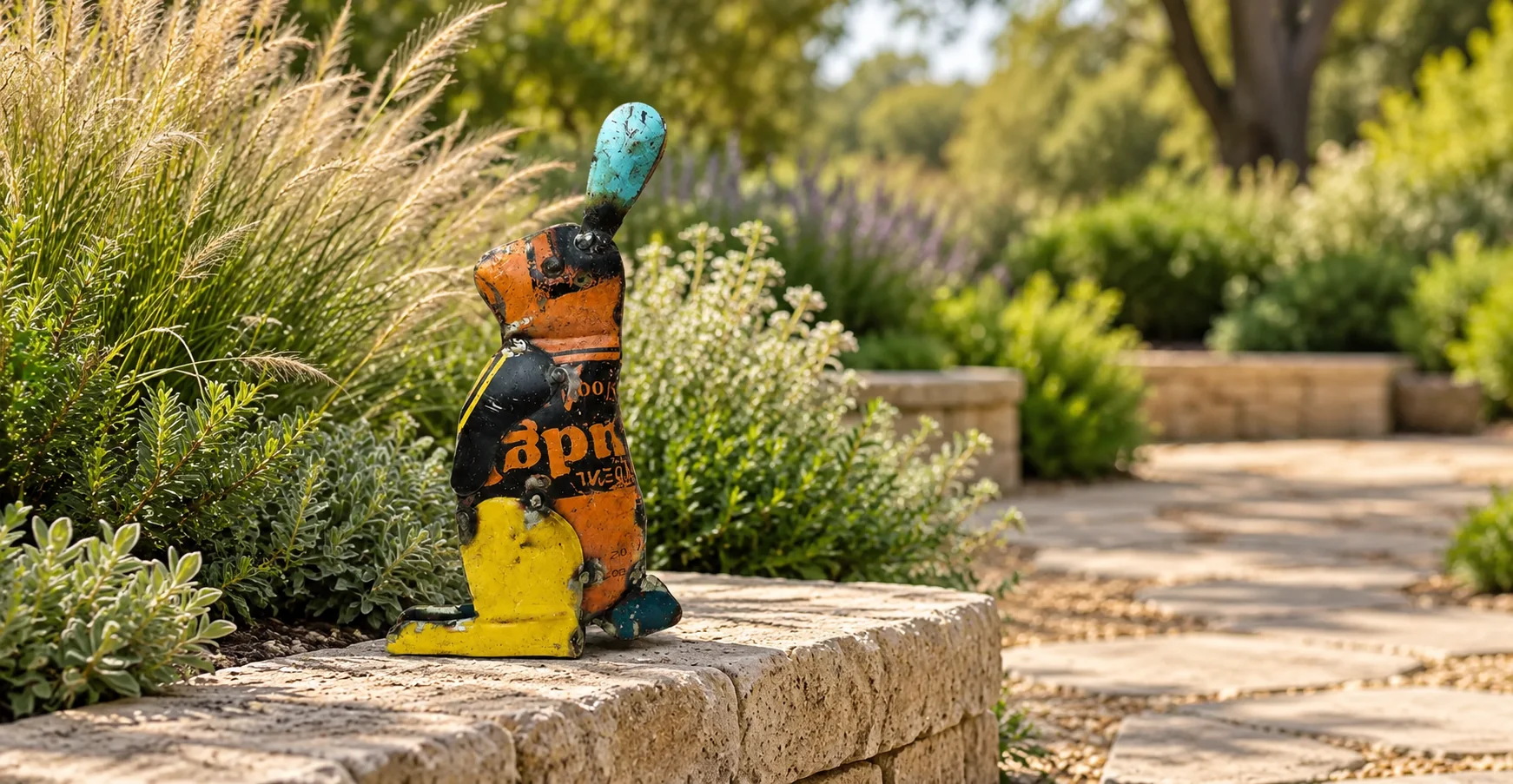
At Gardenalia, our figurines are made from recycled iron and cut, welded and finished by hand by craftspeople in the Thar Desert of Rajasthan, India. A frog holding a heart. A rooster leaning into the wind. No two quite alike.
For Garden Centers
Character-led ranges sell because people connect with them. Hedgehogs and robins do well in the UK and Germany, chickens and roosters suit American farmhouse gardens, and frogs sell almost everywhere. Display figurines in little scenes, a pond corner with frogs and a heron, a woodland corner with owls and hedgehogs, and add a short label about the character or how it was made. Shoppers read them more than you’d think.
Stop Before It Gets Silly
Pick characters that suit the people who use the garden. Buy materials that can take your winters. Then group them, give them something to do, and stop while it’s still charming. Three well-placed figures will get more smiles than thirty scattered ones.
Frequently Asked Questions
Are garden gnomes bad luck?
Quite the opposite. In the old German folk tales, gnomes guarded the garden and brought good luck.
Where should I put a frog statue?
Near water is best, by a pond, a bird bath or in a damp, shady spot. Some people also put a frog by the front door as a small good luck charm.
Which garden figurines last longest?
Metal and good quality stone. Metal copes with frost and sun without cracking or fading.
Can garden figurines stay out in winter?
Metal and most stone ones can. Bring resin, glazed ceramic and non-frost-proof terracotta indoors or under cover before the first hard frost.
What’s the difference between a garden figurine and a garden statue?
Mostly size and mood. Figurines are small, often playful characters you discover as you walk around. Statues are larger, more formal pieces that anchor a view.